

THANK YOU FOR SUBSCRIBING
A featured contribution from Leadership Perspectives: a curated forum reserved for leaders nominated by our subscribers and vetted by our Manufacturing Technology Insights Advisory Board.

Can you tell our readers about yourself and your journey in the sterilization and packaging space?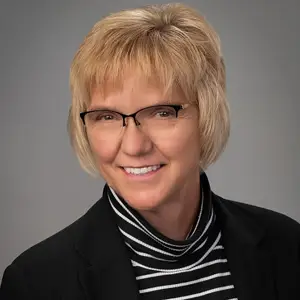
Beate Graeter
I have been a critical care cardiac nurse for almost 20 years in the United States. Originally, I grew up in Germany and worked in healthcare there. I was later a medical technologist and worked first in a doctor's office and then in a hospital laboratory. Then, about four years ago, my Vice-President had an opportunity for me in our Sterilization and Packaging Department(SPD).
The program needed a clinical leader, someone a surgeon would look at and trust. SO my experience as a nurse came in handy. I am also very strong in operations. In Caromont Health, this is the third department that I was asked to take over and improve.
I am very process-oriented and very black and white. That's the sort of person the management looks for. Someone who can stand their ground with clinical leaders to ensure that things get done right with the patient's safety in mind.
How has the packaging and sterilization landscape changed over the years? What are some of the technological innovations that have propelled this industry forward?
One of the biggest challenges is the technological advances in the surgical instrumentation industry. The best example is robotic surgery. I am pleased to say that when I joined Caromont Health, we had one robot, but now we have three.
Other things are advances in the surgery itself. For example, in orthopedic surgery, joint replacements are becoming more complex easier to do for surgeons, and the volume of patients keeps increasing, and their ages are decreasing. So the orthopedic landscape changed dramatically.
Most surgical advances mean advances in the instrumentation industry. Instruments are becoming more complex and harder to clean. One of the greatest challenges is finding the right staff to process and perform these complex processes. The technicians have to know about every potential of an instrument. So we're looking at someone as specialized as an
orthopedic, neuro, or cardiac surgeon, depending on the tool. The technician has to process them in the right and safest way.
With the current job market as it is, we're always competing in terms of salaries with every industry to hire the right person for the job. That itself is very difficult. I think that two things, Retention, and Recruitment of qualified staff will be our biggest challenge over the next five years.
What would you say are the best practices that companies can adopt to steer ahead of their competitors in the SPD market?
When it comes to retaining your staff, I think the best practice is developing an interesting job for the employee. One of those things is self-scheduling. It is one of the best practices I brought over from my nursing days. I throw my schedule out there and ask my team to tell me their schedule, and then we plan things out to get our work done.
Instrument technician is physically and mentally a very demanding job. I truly believe that 10-12 hour shifts are not where we should go as after 8 hours of working in that environment, you lose some of your attention to detail. I strongly believe in no more than 8-hour shifts for any instrument technician as that's eight hours of standing on your feet and mentally making sure that the instruments are safe.
Another thing worth looking at is the pay practices. Money is huge, especially now as gas prices are outrageous. What some technicians make in a year is barely above the minimum wage. These are the people you trust with the safety of your patients. So the pay structure can't be ignored.
Another notable practice is getting the employees certified. Many organizations look to making experts out of their people to show improved performances. The KPIs that we look into show that highly certified staff will show results in terms of lower bioburden, lower number of errors, being more efficient and taking ownership. Letting your frontline staff make decisions on how you work to get the job done instead of telling them is how it needs to be done.
Another important thing is giving them the tools to do the job. Providing them the right tools, height-adjustable workstations, a chair to sit down, borescopes to inspect an instrument, all so that they don't have to find someone to get any part of their work done.
" Sterilization and Packaging technicians have to know about every potential of an instrument. So we're looking at someone as specialized as an orthopaedic, neuro, or cardiac surgeon, depending on the instrument. The technician has to process them in the right and the safest way. "
These are some practices and experiences that I had in nursing and applied to the SPD world, and it works! People want to be respected for a good job done. So we invited several people like our customers, VPs, CEOs, COOs, Chief Medical, and Safety offices to come to the department and show them what we have and what we do. It creates a culture of respect for the other person's job and commends them on their hard work.
What advice would you give to your peers, industry veterans, or budding entrepreneurs who wish to venture into the packaging and sterilization space?
Walk the Walk before you Talk the Talk. If you come to this industry, go out there, put scrubs and PPE on, work in decontainment, work in Prep and Pack, and process a 150 piece orthopedic instruments set. It is very enlightening and will pay off. IF you are thinking about leadership in the profession, knowing where you are, where you were, and where you need to be, comes from being in the frontline.

Manufacturing Technology Insights Weekly Brief
Be first to read the latest tech news, Industry Leader's Insights, and CIO interviews of medium and large enterprises exclusively from Manufacturing Technology Insights
